



Waiting for the election
“It can’t be easy representing Putin’s pal Viktor Orbán in Europe, but the Hungarian ambassador to the UK…” – started Jancis Robinson her last article about Furmint. I really know this feeling: wherever I conduct a tasting or speak about Hungarian wines, I start with apologising and claiming that Hungarian winemakers are not equal with the Hungarian government. I hope that the election of Sunday will bring a new era and our wines will not be subject of common despise due to a power we do not want.
Cover photo: Nadeem Ahmad
It is important to note that this is my opinion, that of Ágnes Németh, owner and editor-in-chief of Hungarianwines.eu, and not that of the wineries I represent.
“I will not be supporting your government with my presence”
In October 2022, I participated in the Blue of the Danube event in London, where countries along the Danube presented their red wines, primarily Kékfrankos. Also present was wine writer Wink Lorch, whom I greatly admire and who is, among other things, the author of the groundbreaking book *Jura*. “A great tasting, and how wonderful that so many countries are presenting their wines together. If there were only Hungarian wines, I wouldn’t be here,” he said, and his opinion wasn’t directed at me—he just told me because we’ve known each other for a long time. This wasn’t the first time he’d made such a harsh remark; earlier, in early 2022, I’d been hit with such a heavy dose of his contempt that I’d grown thick-skinned. I’d been involved in organising the first Hungarian Wine Summit, and I’d invited most of the foreign guests and arranged their travel—from buying plane tickets to personally escorting them. There were still a few plane tickets left when Russia “launched a special operation” in Ukraine, and Hungary quickly made global headlines by refusing to allow shipments aiding Ukrainians to pass through its territory. Polish wine writers began canceling their participation in the Wine Summit one after another, and some even stated in open letters that they would not participate in a state-sponsored event in a country that was complicit in the massacre taking place in a neighbouring country. The most offensive letter was the one from the editor-in-chief of an influential German publication, because he wrote to me and insulted me for being Hungarian, claiming I am complicit in the collective guilt my country bears.
The numbers don’t lie
FIDESZ voters will surely dismiss this, viewing it as liberal hypersensitivity, and of course they’ll repeat what’s being broadcast on the government-controlled TV and radio: this isn’t our war; our government is doing everything in the interest of peace to keep our sons, husbands, and fathers from being sent to war. The Poles, who share a much longer border with Ukraine, do not see it this way, and no one else’s arguments—including this one and many others—penetrate the country’s bubble.
The numbers, however, do, and Hungarian winemakers feel it in their bones that somehow everything is getting worse. Hungarian society has become severely impoverished, wine sales are steadily declining, and while exports could be a lifeline, they too are falling. Exports of Hungarian quality wines to the United Kingdom were 45,896 hl in 2021, while in 2025 this figure will be 5,623.97 hl!
(To be fair, it should be noted that, due to Brexit, a significant portion of Hungarian wine enters the United Kingdom via Belgium, and this is reflected in the statistics. In 2021, 9,706 hl of wine went to Belgium, while in 2025, the figure was 36,373 hl. If we assume that the entire surplus—that is, 26,667 hl—went to the UK (which it clearly did not), then the total volume of Hungarian wine in the UK would be 32,290 hl, but this still represents a significant decline compared to 45,896 hl. And I also have information that sales of Hungarian wines have fallen to 10% at one of the largest British wine retailers.)
Pasi Ketolainen MW, a Finnish importer of Hungarian wines, also reported a sharp decline across the entire Scandinavian region. Things really went south for them when the Hungarian government blocked Sweden’s NATO membership—our government dragged its feet for 649 days before finally voting in favour, but by then the Scandinavians had already lost interest in us. In 2021, we shipped 2,236 hl of wine to Finland; by 2025, that figure had dropped to just 1,366 hl. A few days ago, I spoke with a Swiss merchant who deals in more than just Hungarian wines. He says that if he brings wines from two different countries to a restaurant, 90% of the time, the Hungarian wine isn’t chosen.
According to statistics, exports of high-quality Hungarian wine have increased overall; with a total of 338,688 hl of wine leaving the country in 2021, compared to 402,710 hl in 2025; however, this growth is largely due to Slovakia, as 76,010 hl went there in 2021, compared to 109,244 hl in 2025. And no, it’s not that Hungarian wine has become increasingly popular in neighbouring Slovakia; the growth is most likely due to the prevalence of VAT fraud, since no VAT is required between EU countries, meaning that those who purchase the same wine from a Slovak retailer can get Hungarian wine at a lower price. Of course, this is merely a hypothesis based on informal information.
“Hungary is moving forward, not backward”
That was FIDESZ’s slogan in 2022. Well, even our grapes are growing better, at least according to the Ministry of Agriculture. At the end of 2024, I received an email from a journalist at the British publication Drinks Business, who asked what miracle had occurred in Hungary that, out of 17 EU countries, Hungary was the only one where the volume of wine produced had increased by 2024. He cited the then-recent OIV report. It turned out that this was not the case; the figures provided to the OIV were simply incorrect. I notified the relevant authorities, yet the 2025 report still contains incorrect figures. But that’s just a minor detail.
Wine culture lacks culture
As the leader goes, so goes the people; setting an example is an indispensable factor not only within the family but also in the country. Viktor Orbán doesn’t concern himself with wine; he doesn’t particularly like it when he drinks, preferring to consume pálinka instead (fruit spirit of Hungary). But for anyone to think that quality pálinka producers are happy about this—far from it. With the stroke of a pen, he ruined the entire industry when he legalised home distilling. The shoddy but cheap stuff ruined the hard-won market for high-quality pálinka, and now it’s gone—many distilleries have closed, a few are barely hanging on, and some are trying to stay afloat by making gin or other spirits.
For the wine industry, the abolition of the “zero tolerance” policy—one of the 12 points of the Winemakers’ Manifesto that was never implemented—remains a sore spot. Viktor Orbán personally promised József Bock that this would change, but the rule remained in place. When zero tolerance was introduced, wine sales in restaurants dropped drastically and have remained low ever since; yet restaurants would profit more from serving wine, but Hungarian diners are forced to drink soda with their steak. Society isn’t treated like adults in this regard, just as it isn’t in so many others.
I hope that more and more people are getting their news from the handful of remaining independent media outlets, that real news is breaking through the walls of our bubbles, and I hope that by the night of April 12, the only bubbles left will be in our glasses as we celebrate the end of a sad era.
Ágnes Németh
9 March 2026
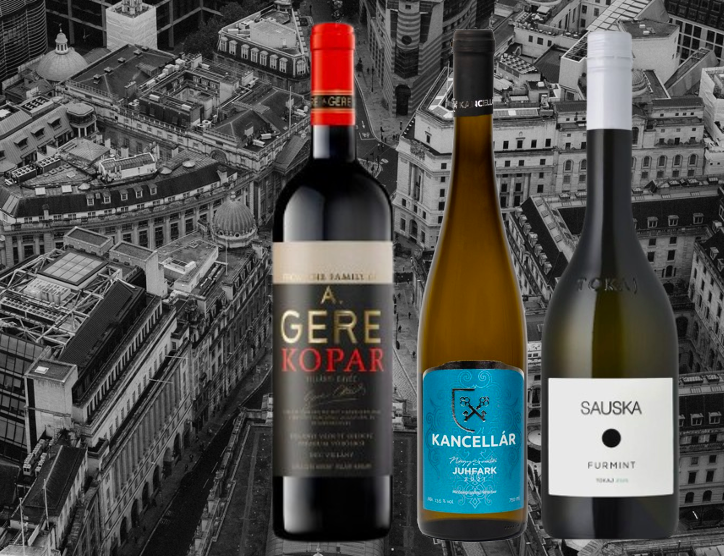
The Ultimate CEE Wine Fair – 16 June, London
From Armenia to Poland, CEE Wine fair showcases novelties even for the seasoned British wine trade.

Hungary receives the 3rd most medals at Berliner Wine Trophy
Hungary ranks 3rd in the medal contest with 178 medals after Italy (337 medals) and Spain (245).
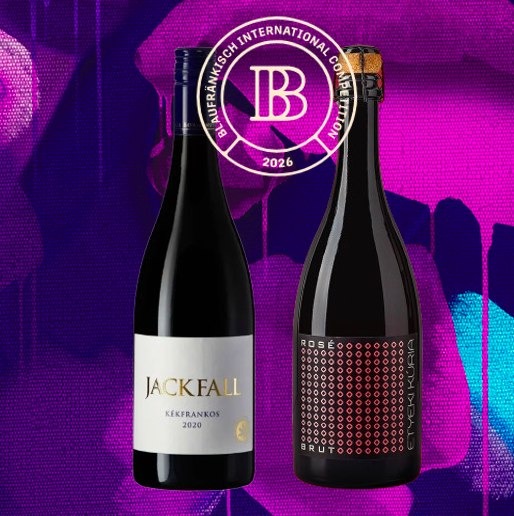
2 out of the 7 category winners are Hungarian!
306 wines from 13 countries were tasted at the 1st Blaufränkisch International Competition in Morav
