


The secrets of a defiant yet wonderful variety
The grapegrower and the winemaker share insights
The article below was written by Tóth Ferenc Winery team.
See the original here.
When we talk about Kadarka, we must picture a true prima donna. There is no doubt that it shows its finest side in Hungary’s Eger and Szekszárd wine regions. It is an elegant grape variety with immense potential, yet it is extremely delicate: it demands the utmost professional care from the vineyard to the cellar. In the right terroir and in careful hands, it offers an unparalleled experience, but it punishes even the slightest negligence immediately. Let’s take a peek behind the scenes and see what makes making Kadarka such an exciting—and at the same time, challenging—task.

Life among the vines: the challenges of a grapegrower
Kadarka demands attention right from the pruning stage: with cordon training, we use short-spur pruning. To ensure a good harvest, special attention must be paid to green work. Shoot thinning from late April to mid-May, followed by cluster thinning in mid-summer, are essential steps. The greatest challenge is the variety’s famously thin skin. Because of this, it is highly susceptible to powdery mildew and botrytis (moderately susceptible to downy mildew), so plant protection must be carried out with great precision. The thin skin also reacts poorly to rainfall: during a heavy autumn downpour, the harvest can practically “wash off” the vine. For this very reason, to preserve the fruit’s health and purity, we sometimes have to harvest earlier than planned.
Did you know that the berries within a Kadarka cluster ripen unevenly? Imagine a single cluster where you’ll find pale pink berries with piercingly bright acidity alongside almost raisin-like, sweetly overripe berries. The wine must ultimately shape this duality into a well-rounded, harmonious flavour profile—this is what truly puts the winemaker to the test.

In the silence of the cellar: the winemaker’s decisions
In the vineyard, Tamás cultivates and harvests the grapes at the plot level, in accordance with his pre-set goals. If the raw material is beautiful and healthy, the degree of ripeness determines the path it will take deep within the cellar:
Siller: This is our most reliable wine, as Siller can be made from Kadarka in almost every vintage.
Classic: If the raw material is sufficiently ripe, we ferment it in tanks, followed by a gentle, short aging in oak barrels. This gives rise to the “little Kadarka” or the “little Bikavér.”
Superior: When nature is kind to us and the raw material is exceptional, we ferment it in open vats or tanks. This is followed by rest: we age the wine in 500-liter wooden barrels. Later, tasting each barrel with great care, we decide whether it will become the base for Superior Kadarka, Superior Bikavér, or our flagship wine, the Grand Superior Várvédő Bikavér.

Fine-tuning the style
Due to the Kadarka’s thin skin, the wine is more modest in color, tannins, and even body and length than a red variety with thicker skin. In an average vintage, we turn this into a virtue: we craft a likable, modern, low-alcohol, light, and fruity wine from it. However, crafting a truly substantial, full-bodied Superior wine from it is a real challenge, one that is largely decided out in the vineyard. Since the wine’s structure is inherently elegant and airy, barrel use must be handled with extreme care—excessive oak aging would easily overwhelm this delicate wonder and compromise its quality.
More about Tóth Ferenc Winery

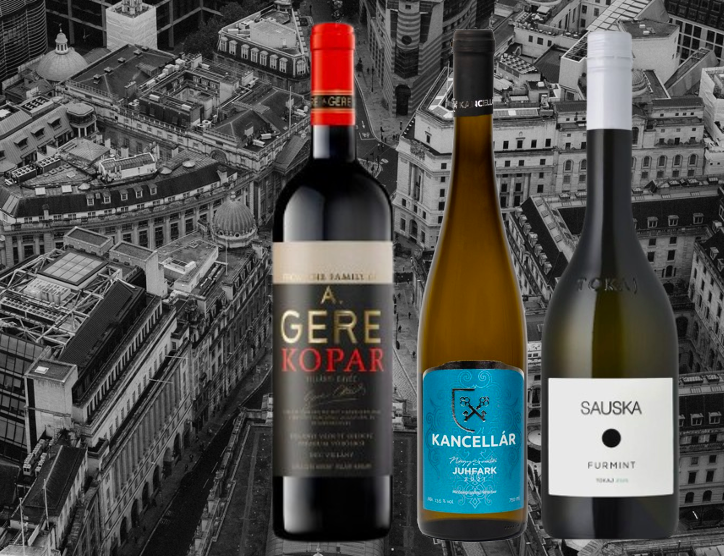
The Ultimate CEE Wine Fair – 16 June, London
From Armenia to Poland, CEE Wine fair showcases novelties even for the seasoned British wine trade.

Hungary receives the 3rd most medals at Berliner Wine Trophy
Hungary ranks 3rd in the medal contest with 178 medals after Italy (337 medals) and Spain (245).
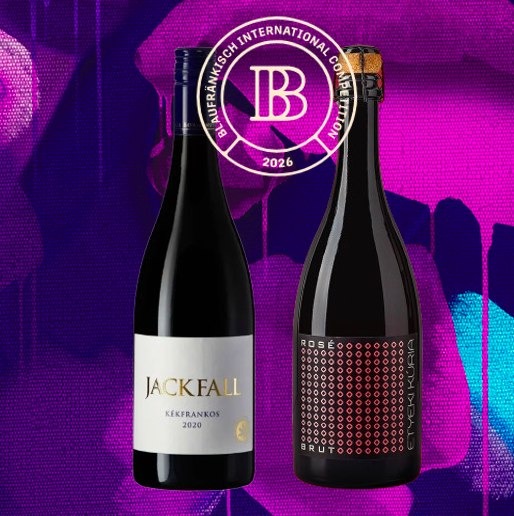
2 out of the 7 category winners are Hungarian!
306 wines from 13 countries were tasted at the 1st Blaufränkisch International Competition in Morav
