


8+1 stories of Pinot Noir in Hungary
Tibor Gál’s legacy and a princess on the vineyard
On May 9, 2026, a special tasting took place at Jakab Winery in Badacsony. The owner, Péter Jakab, invited fellow winemakers who are fans of the Pinot Noir grape variety and who consider the love and commitment to the grape variety to be Tibor Gál’s legacy. We, Hungarianwines.eu team could not participate, but two dear friends could, so this is a “guest article”.
Text: Dóra Dámosy
Photos: Orsolya Szabó
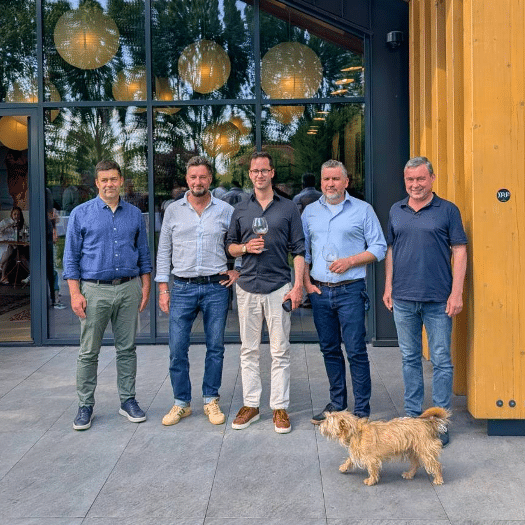
Participants: Zsolt Liptai (Pannonhalma Archabbey Winery, Pannonhalma), László Rábai (Carassia Winery, Transylvania, Romania), Tibor Gál jr. (Gál Tibor Winery, Eger), Sándor Mérész (Etyeki Kúria, Etyek), and the host, Péter Jakab (Jakab Winery, Badacsony).
“…this grape variety is an elegant, restrained, but exceptional female character, with whom we fall in love again and again, throughout our lives.”
“Pinot Noir was like the forbidden fruit in the beginning, in Hungary in the late 1990s we couldn’t even taste it, no one really cared about the variety,”
How can you tell a story about someone when they are no longer with us, but their work, their beliefs, and their visions live on with us? How can you tell a story about the past when roots determine everything and we can taste the heritage in the present? And how is it worth thinking about visions that were born in the past but continue to take shape in the present? We were enriched with answers and a friendly tasting through wines and stories. Past and present, dreams and reality, former visions and lived experiences from the history of Hungarian Pinot Noir in memory of Tibor Gál.
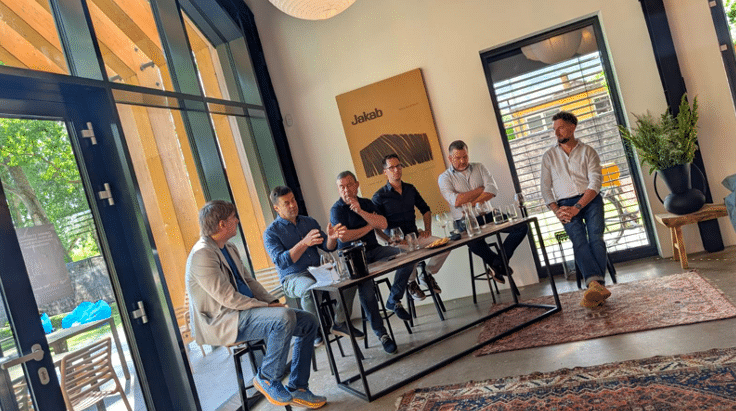
Plus one – The origo
Tibor Gál jr. told the first story about who to ask for advice from in Hungary when dealing with Pinot Noir. He graduated as a winemaker at the then University of Horticulture, and wrote his thesis on clones of the grape variety. He thought he would knock on the door of the neighboring Department of Viticulture to ask for help with Pinot. The department suggested to him that although they did not know much about the grape variety, he should go to the Gál Tibor Winery in Eger, where they would help him, they knew the most about the variety (they did not know that the young student is the legendary winemakers’s son, himself).
The planting of Pinot Noir in Eger began in the late 1990s, before that no one had any substantial experience with the variety in Hungary. Later, when they came for advice regarding the grape variety, Tibor Gál said: “We planted it, we started it recently, but anyone who is just starting out has no idea how much they don’t know about this grape variety.” And he passed on all the knowledge he had accumulated by then.
One and two – The sparkling wine that has been made for thirty years
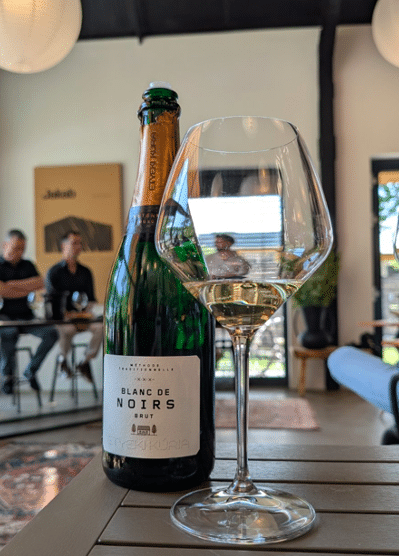
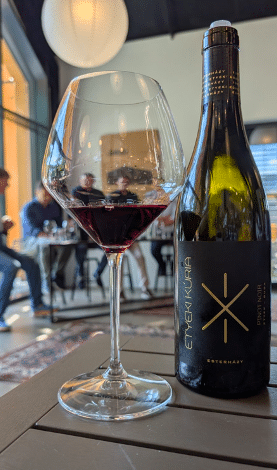
Etyeki Kúria Methode Traditionnelle Blanc de Noirs and Etyeki Kúria Pinot Noir Selection 2022
Sándor Mérész, the winemaker of Etyeki Kúria, was there in these initial experimental years in Eger, working with Tibor Gál. His previous experience with Pinot Noir also played a role in his arrival at Etyeki Kúria. Tibor Gál often said that the variety could be home in Hungary in Etyek, and as he said: “Fortunately, the people of Etyek don’t know this yet!”. Etyek is truly an ideal, mostly limestone soil, the Pinot Noir growing area that serves as the basis for the sparkling wine is a 250-meter-high plateau, with more compact, sedimentary clay soil, just like Chablis, at 47.5° north latitude.
The sparkling wine made using the traditional method was aged in steel tanks for 8 months after the 2023 harvest, then in bottles for 24 months. It is very young, but a serious player in its own league, with only 2 g/l of residual sugar. This is the sparkling wine that was sabraged with the wing of his small plane by the aerobatic pilot Péter Bessenyei, a big Pinot Noir fan, on the occasion of the winery’s 30th birthday. If you don’t believe it, go find out!
Pinot Noir takes the barrel well, even the new barrel. You don’t have to be afraid of the new barrel when it comes to Pinot Noir, these were also the words of Tibor Gál. The 2022 Etyek Kúria Pinot Noir Selection was aged in 100% new barrels for 15 months. The use of French and Austrian barrels is the result of extensive experimentation at the winery, the fruit of Nagy-Látó Hill was harvested at different times, and the best barrels were used in this blend.
This hillside is a sunnier, warmer area, the soil is loess, clayey, and due to erosion effects, the grapes here can produce more vegetal wines, which can be particularly well suited to Pinot Noir. This wine is substantial, intensely fruity, with the possibility of long ageing. Velvety even when young, it is already showing its harmonious face. Part of the Etyek Kúria area is a higher, cooler, wind-swept plateau, from where the sparkling wine is harvested, while the area on Kis-Látó Hill is more sheltered from the wind, and the soil is loess, clay, marl, with more sand. These are the areas that are home to the most beautiful Pinot Noirs in the Etyek-Buda wine region.
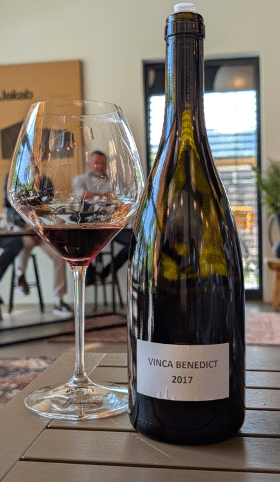
Three – It is also worth looking for the best areas in the Szilágyság (Crișana region)
Carassia Vinca Benedict 2017
László Rábai, from Carassia Winery, brought the oldest available Pinot Noir from 2017 to the tasting. Through this wine, he told us about the legacy of Tibor Gál, who in 2004, during a trip to the Szilágyság, outlined that a sparkling winery could be built on this soil of mica schist, taking advantage of the large temperature fluctuations of the 300 m high plateau, which should focus on traditional sparkling wine production and Burgundian varieties, reflecting characteristics very similar to Burgundy. As László Rábai tells us, for Tibor Gál, Pinot Noir symbolized the top league of the wine world, where, as he saw it, we could reach it because we farm in a climate where this grape variety can show great, special things. And although only after his death, the Carassia Winery was established in the areas designated by him, where the first Pinot Noir still wine was made in 2014, and from the fruit of the the 2025 harvest, blanc de noirs sparkling wine is also being made.
Tibor Gál’s vision of establishing a winery primarily focused on sparkling wine production in this region was considered a real innovation around 2003-2004, but it has now been proven that long-term foresight and forward-looking thinking were based on a well-considered idea based on rational foundations. Thanks to the large daily temperature fluctuations, the growing area has a microclimate that is very similar to Burgundy, even if this geographical region is characterized by a drier continental climate.
The Vinca Benedict Pinot Noir from 2017 takes us back to the experimental, path-finding period of the first years. The wine still shows its beautiful face after nine years, with a youthful acid structure, a fresh, tight wine. In the coming years, we hope to be able to taste the winery’s Pinot Noir sparkling wine as well!
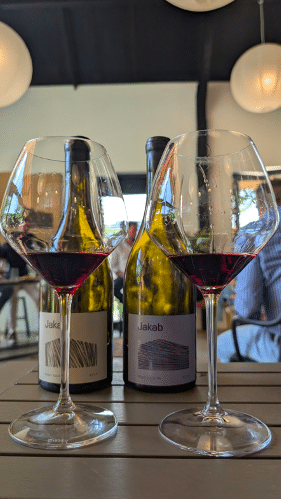
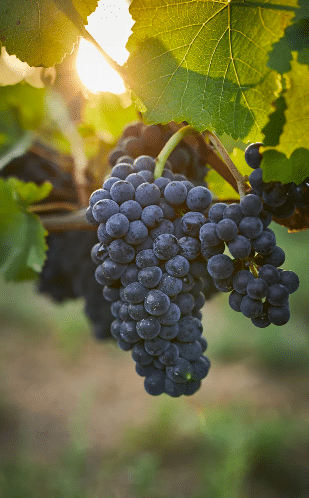
Four and Five – barrel experiment in Balaton Uplands
Jakab Pinot Noir FR 2019 and Jakab Pinot Noir HU 2019
Péter Jakab, the owner of the Jakab Winery in Badacsony, met Tibor Gál through his vineyards. Péter’s passion for Pinot Noir began years before he bought a vineyard in Balaton Uplands in 2012. The vineyard that Tibor Gál had designated for the planting of Pinot Noir. In the late 1990s, he was the one who found the 10-hectare area in Kővágóörs, in the southeastern, forested, wooded part of Küszöb-Orra Hill, where, at the suggestion of Huba Szeremley, he planted Pinot Noir. The area is the highest, coolest, best-watered plateau of the hill, where conditions similar to those of Burgundy prevail best. These Pinot Noir plantations are the most important areas of the Jakab Badacsony Winery, the owner is committed to Pinot Noir as a variety. As he says, for him this grape variety is an elegant, restrained, but exceptional female character, with whom we fall in love again and again, throughout our lives.
The climate change of recent years, which has brought primarily an increase in heat amounts in the domestic areas, a decrease in precipitation and its distribution becoming more extreme, as well as an increase in spring frost damage, favors those vineyards in which this climatic exposure can be mitigated, reduced, or where the microclimate of the area has the same effect. Tibor Gál felt these small accents very precisely, and his ability to foresee the future was coupled with down-to-earth rationality and objectivity.
Jakab Badacsony’s two 2019 Pinot Noirs are the result of a special experiment. In order to fine-tune the use of barrels, the fledgling winery bottled its first vintage by ageing part of the batch in Hungarian barrels (Kalla and Kádár Hungary, 500l) and the other part in French barrels (François Frères and Montgillard Bourgogne, 228l). A barrel experiment and a Pinot Noir experiment at the same time, which provides more and more interesting things as the years go by and helps professionals to think together.
If we truly think of Pinot Noir as an elegant, sophisticated, yet sensitive princess, then the use of barrels can only be a similarly elegant, restrained companion. The French barrel results in tighter tannins, a more elegant, graceful structure, the Hungarian barrel provides a kinder, rounder and more rustic taste experience after six years. We are curious to see what faces we will see of the two movements in the future.
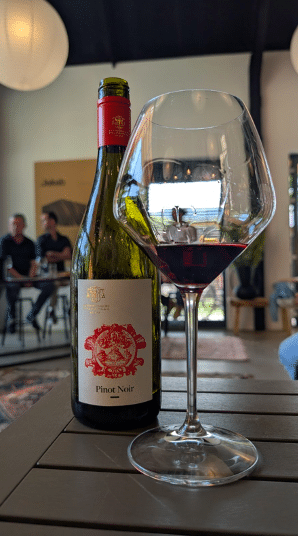
Six and Seven – Reviving the Benedictine Heritage in Winemaking
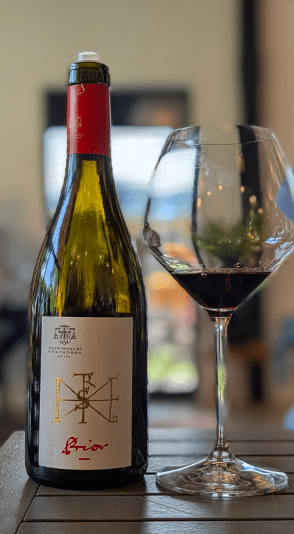
Pannonhalma Abbey Winery Pinot Noir 2019 and Pannonhalma Abbey Winery Prior 2019
The chief winemaker of the Pannonhalma Archabbey Winery, Zsolt Liptai, started working alongside Tibor Gál in Eger in 2001, and has been the Archabbey Winery’s chief winemaker and managing director since 2003. Tibor Gál recommended him to head the then-reorganizing winery, who supervised the development of the Benedictine abbey’s entire viticultural and winemaking concept as a consultant.
“Pinot Noir was like the forbidden fruit in the beginning, in Hungary in the late 1990s we couldn’t even taste it, no one really cared about the variety,” says Zsolt Liptai. When the Californian trainee returned to Hungary after years of training and started working in Eger and Pannonhalma, he was actually present during the first years of the grape variety in Hungary.
Tibor Gál helped the reviving Benedictine winemaking tradition as a consultant, and Pinot Noir was planted in three of the winery’s vineyards, the Széldomb, the Babszökő and the Tavaszó vineyards. The characteristics of the three vineyards are different, but the characteristics of the areas complement each other in different ways every year. Széldomb is the stable base, Babszökő provides a denser, more cohesive base, while the Tavaszó vineyard is the most exposed, coolest area, the grapes harvested from here produce a fruitier, Burgundy-style wine. All three areas can bring out different virtues in the wine, which is why the wines are tasted six or seven times each year and the barrels are classified each time. 100 barrels are filled with Pinot Noir every year, of which 5-6 barrels are released as the Prior barrel selection.
According to Zsolt Liptai, 2019 was the last year of peace, the last moderate vintage, of course, when it comes to the weather. In Burgundy, the quality differences that appear in different vintages can be reflected in the price, which is not yet typical in Hungary. With the birth of the Prior barrel selection, they can show their audience the most beautiful and precious values of each vintage.
Eight – The beginnings at the very end
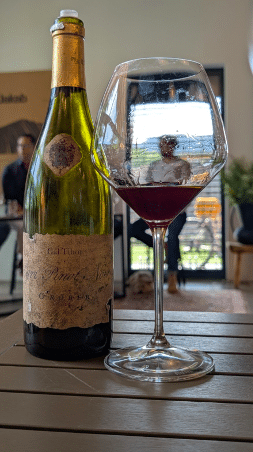
Tibor Gál Egri Pinot Noir Grőber 2002
Tibor Gál Jr. started and will also close this friendly conversation. He brought a Pinot Noir from Eger that still praises his father’s handiwork. The beginning of working with pinot noir, 2002, is the virgin harvest of the Grőber vineyard, which was sealed in this bottle and which the participants of the tasting could taste. The early 2000s, 2002, 2004, 2005, 2006 were the best years, when the most beautiful pinot noirs ever were made in Eger, according to Tibor Gál Jr.
Although those years were still in full swing, the path on which the winemakers present set off began from here. This grape variety abounds in sophisticated, princess-like traits that require distinguished attention and treatment, but consistent, uncompromising work in the growing areas and in the cellar always pays off. In the case of Pinot Noir, the enthusiastic, committed consumer is by no means the novice wine lover, but rather a connoisseur, who appreciates the uniqueness of a grape variety and the elegance and clean simplicity of the wine made from it.
There is no single sentence that could summarize the seemingly short afternoon that these five professionals spent in the company of each other and the audience. The introduction of Pinot Noir grape variety in Hungary began with the work of Tibor Gál more than 25 years ago, and it was he who, drawing on his international expert experience, outlined a vision, created the foundations and showed a possible direction at the beginning of the work with the grape variety in Hungary.
Those who cultivate the areas he chose long ago, today also represent his spirit and make outstanding wines. The vision is exciting, and the path is navigable, because the foundations have been built over decades of serious analysis and professional knowledge. Working with Pinot Noir is a continuous search for a way and adaptation. Adaptation to the often and constantly changing climatic conditions, technological development, and changing consumer needs. But the stories that connect us and the wines that are born from this story are worthy of care, attention and, above all, enjoyment.
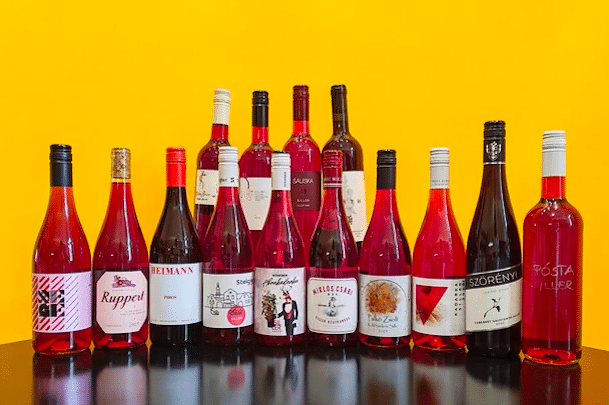
The best Siller according to Borsmenta magazine
Altogether 4 Siller wines arrived from Szekszárd to the tasting of 14 Siller wines. The winner is H
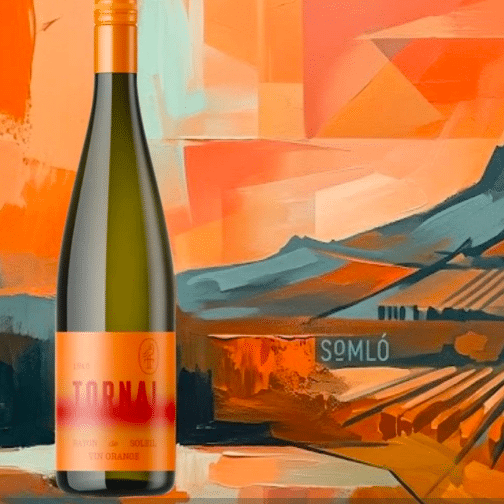
New release orange wine from Somló
In the summer the very first Tornai orange wine has hit the shelves. 100% Hárslevelű, 100% flavour
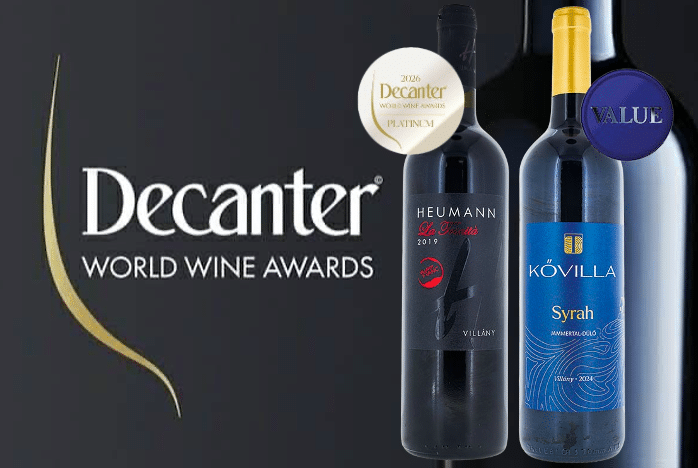
Hungarian red is one of the five unexpected stars of DWWA 2026
These 5 surprises are 1. red wine from Hungary, 2. Brazil as a wine country, 3. Žilavka white varie
